Sometimes, I wonder if I will ever become bored about walking (or biking) the same route day after day. Perhaps. But then something special happens and it made it all worth it, and it makes you want to keep coming back. And that's the thing with nature - you ever know what you are going to find or when you are going to find it. And throw in me taking photographs, you will never know if you are going to get that
perfect shot until you go out and find that opportunity and press that shutter.
I'll leave the bit about the falcon at the very end. But these were some of photos prior and after the falcon.

Northern Harrier on the horizon.
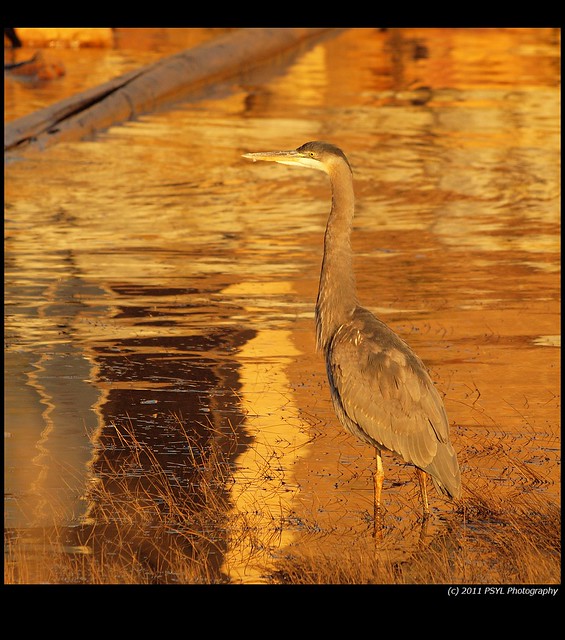
My friend who I see almost everyday.

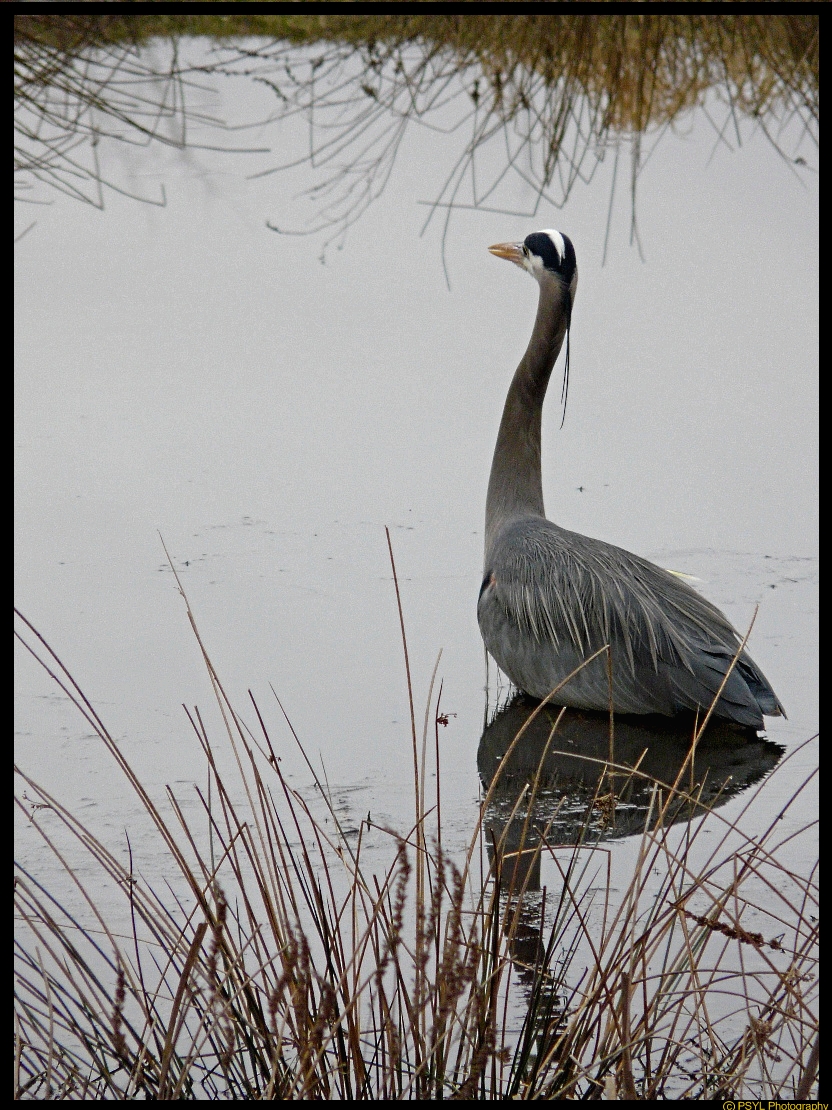
Another Great Blue Heron who is very shy (or afraid of me/humans) and always takes off as soon as it sees me.
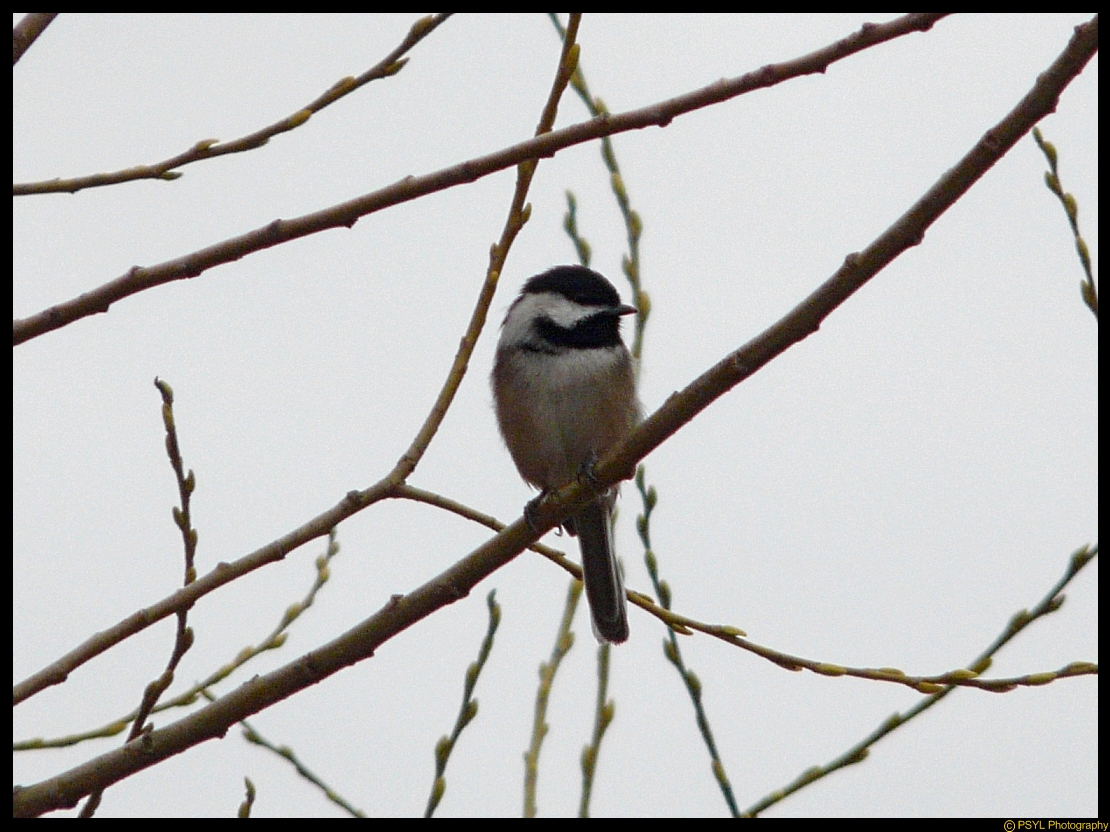
Black-capped Chickadee watching old man with dog.
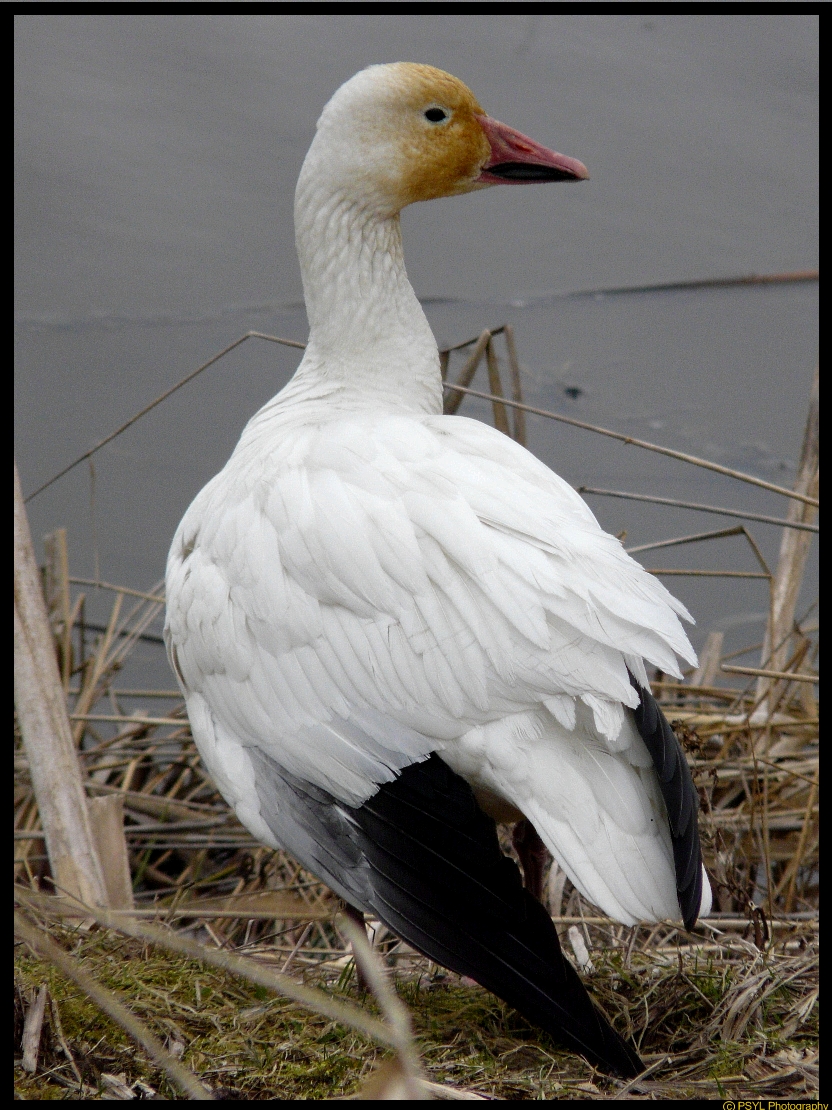
I think I finally figured out why this lonely Snow Geese are always hanging out with the Mallards and Wigeons, and not the rest of the Snow Geese group. See that limping left wing? Every time the goose folded its wings, that left wing felled again. I suspect it's either injured or broken - hence the inability to fly, join the rest of the group, and/or even migrate North. I hope I am wrong.

Not entirely sure what this heron was thinking or doing. Or maybe it was just in that particular position at that moment. Interesting though, hiding behind that post. You can see the large group of Snow Geese behind. They were just meters away from the lonely one mentioned above.

White-morph juvenile Snow Geese (
Chen caerulescens). I kind of like the gray color. It shows off that interesting pattern on the feathers unseen on the white adults.
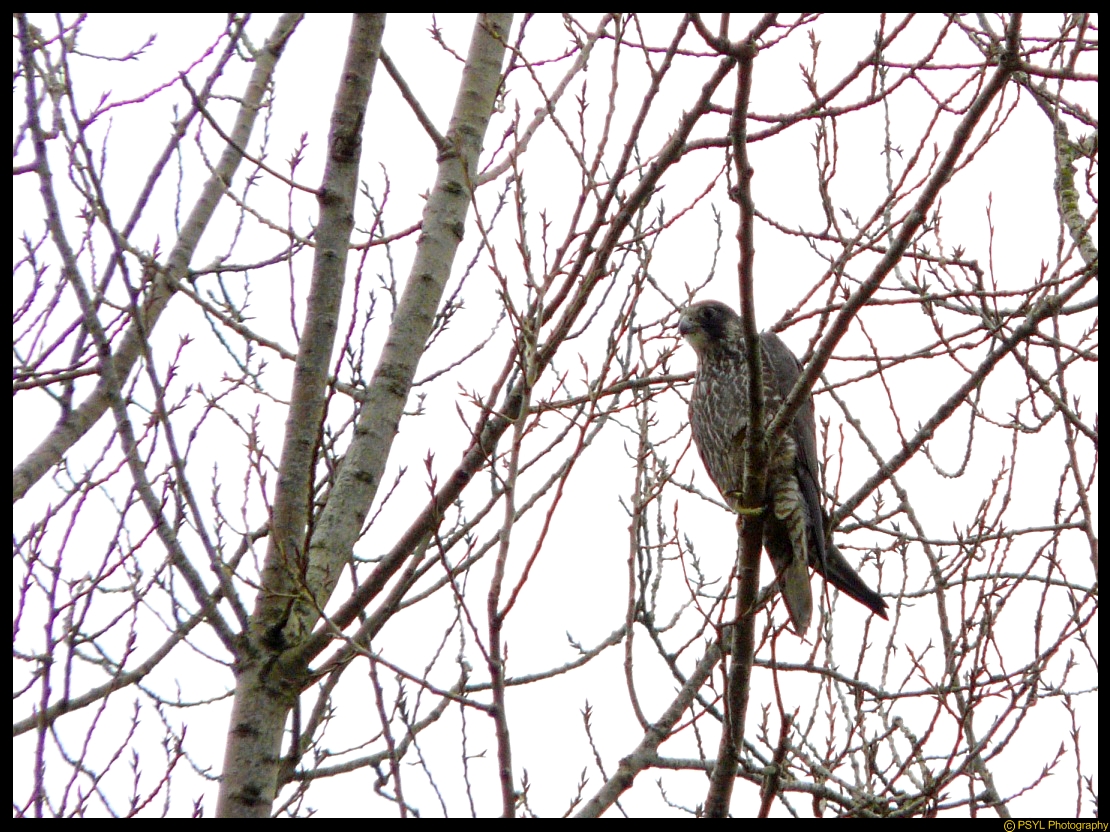
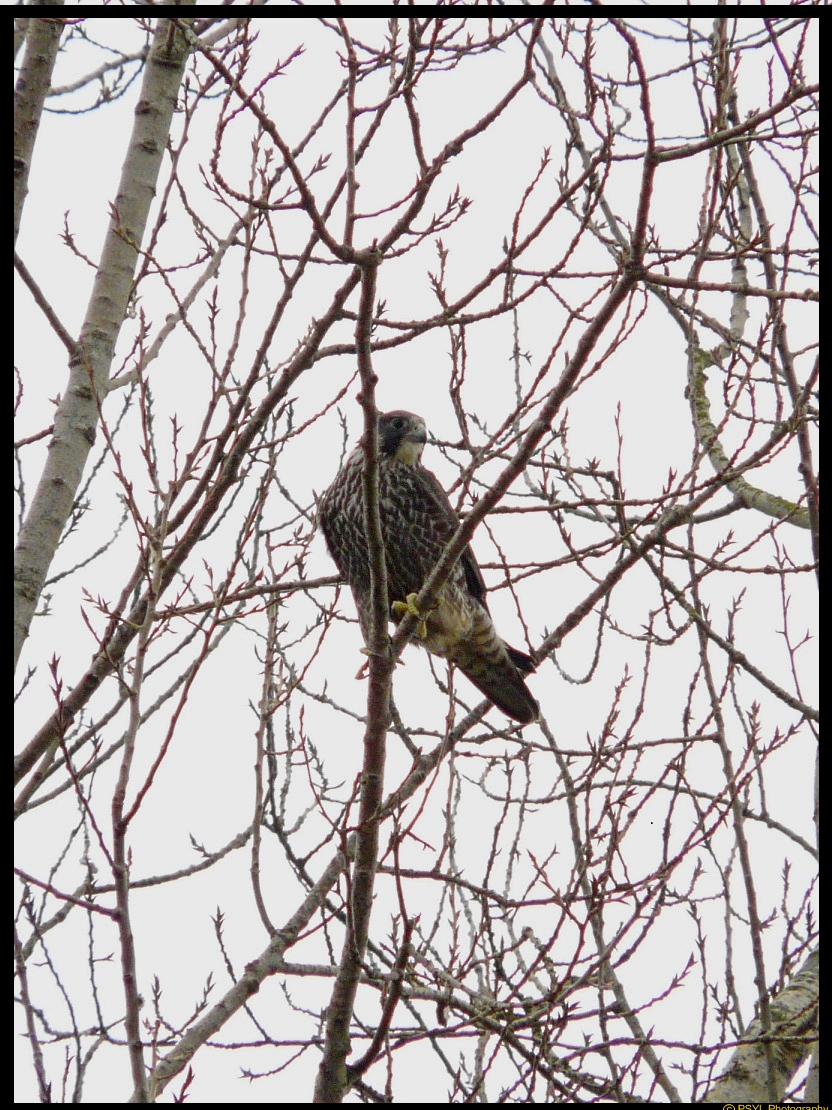
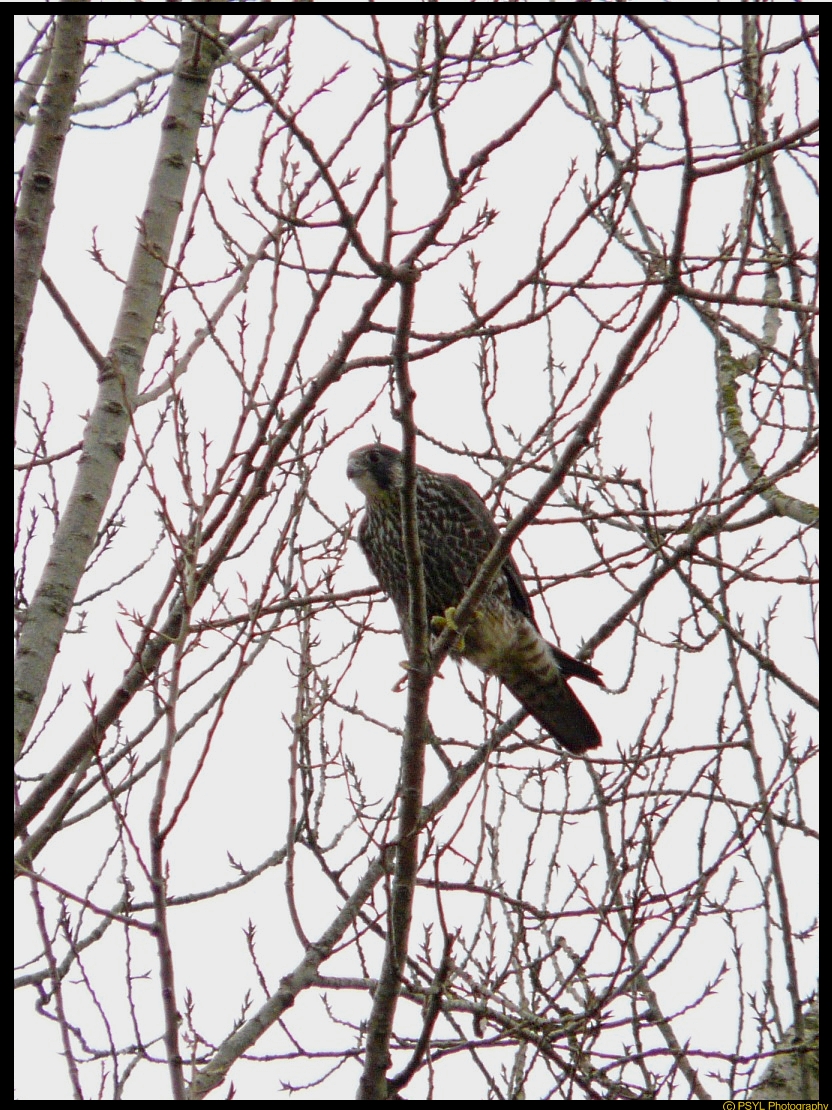
Now, onto the Peregrine Falcon (
Falco peregrinus). It was sighted on the North end of the Quilchena Golf Course (next to the residential areas) on that tree where the Red-tailed Hawks usually perched. At first, I thought it was a hawk, but it looked much smaller.
Coming up close, I realized that it was something I have not seen before (since I only really started birding last year), but I know enough to say it wasn't a hawk and was either a merlin or falcon.
According to
Environment Canada, their long pointed wings enable them for rapid flights, as they can dive at speeds up to 300-km/hr, making them the fastest of all raptors
! They are larger than Merlins and can be differentiated from the Prairie Falcon (
Falco mexicanus) by their distinctive "sideburns".
Mostly importantly, they are a species-at-risk here in Canada as their population were almost wiped out by DDT usage during the 60s. Now, it was estimated that over 7000 pairs breed in North America, including Mexico. And I am quite privileged to see one today!


Close-up photo (cropped). They are a beauty! This is the reason why I want to go out everyday.
.