Showing posts with label fly. Show all posts

2017/07/27

More urban insects on campus

As I mentioned last month, there is a group of pollination-enthusiasts conducting weekly pollinator observations on uOttawa campus.  Here are some of the insects and plants we have observed this month.

Because of all the insect photographs I am taking, I bought a small flash this month and started incorporating a diffuser and reflector into my macrophotography based on the tutorial from this blogger.

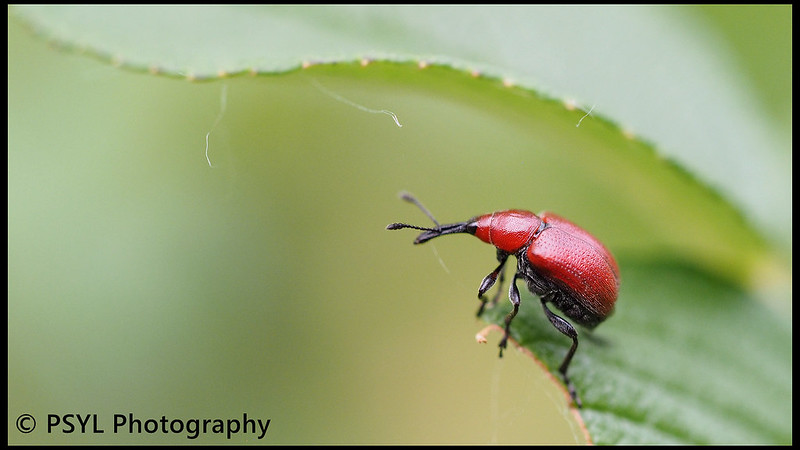
Rose Curculio (Merhynchites bicolor)

2017/06/22

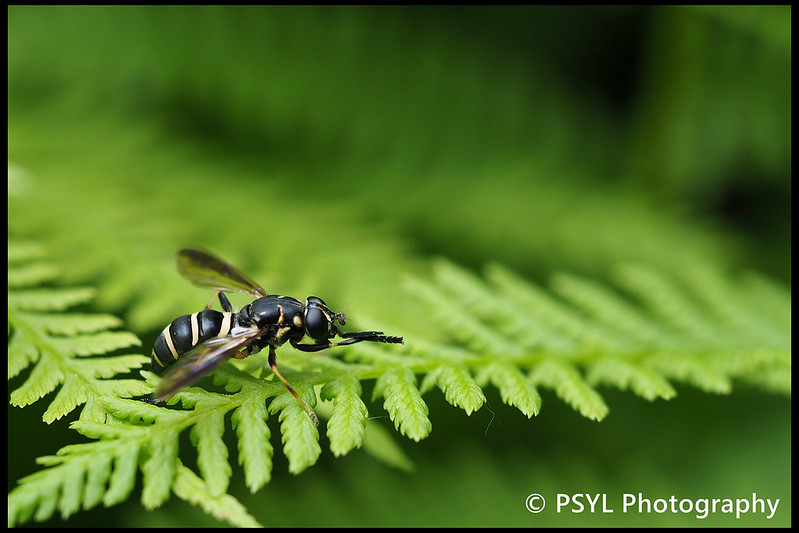
Wasp-mimicking Temnostoma fly

I was planting some native plants on campus today and saw a syrphid fly mimicking a wasp by holding its front legs out front like a wasp's antenna.  I believe it is a Temnostoma sp., which I saw a similar one more than four years at Algonquin.

Temnostoma syrphid fly
Nature is so fascinating!

2016/07/19

July update - Rio Grande and San Isabel National Forests (July 5 - 8)

From July 5th to 8th, I traveled to Rio Grande and San Isabel National Forests to search for Mertensia lateriflora and M. ovata, respectively.

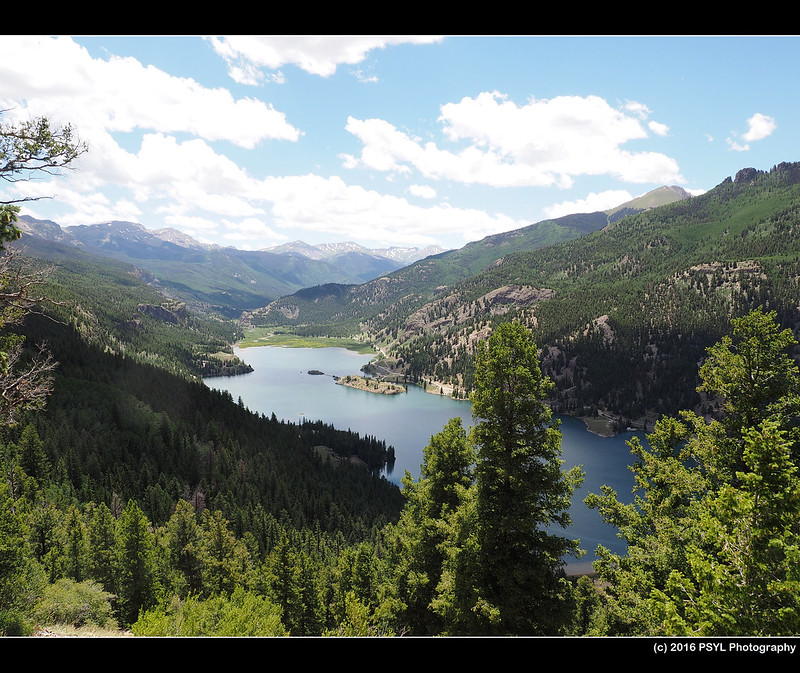
Lake San Cristobal
Stopping along the Silver Thread National Scenic Byway to take a look at Lake San Cristobal.

2016/05/18

Exploring McCarthy Woods for new warbler lifers!

Yesterday I came across this blogger's post about all the interesting birds found in McCarthy Woods and nearby areas.  So today, I went there to look for them myself.

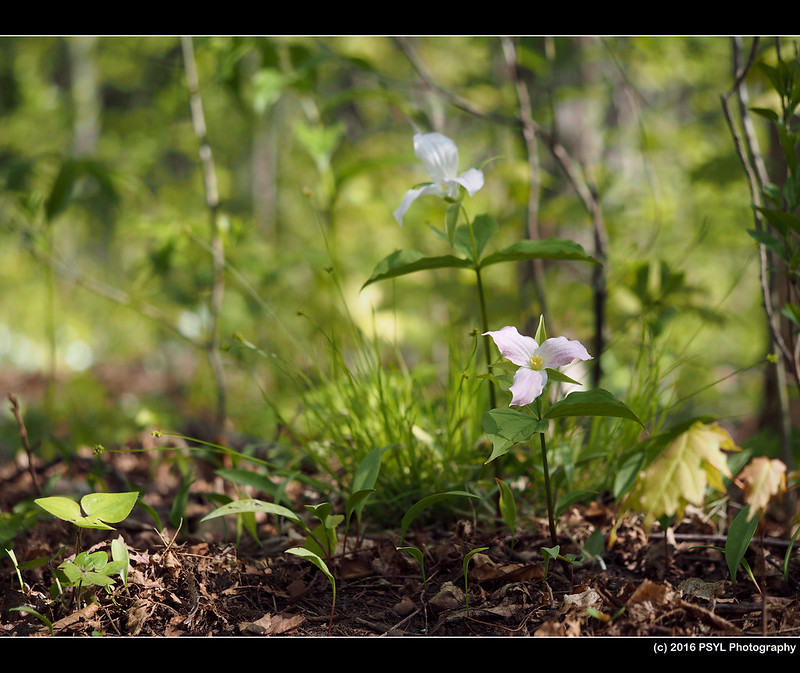
White Trillium (Trillium grandiflorum)
McCarthy Woods is quite beautiful this time of the year where the White Trilliums (Trillium grandiflorum) dominate the forest floor.

2015/07/18

July update - Trip through Four Corners, Grand Canyon, and Wyoming

Over a span of four days (July 12th to 16th), I traveled across five states and drove more than 2,400 km.

2015-07-12-P7120001
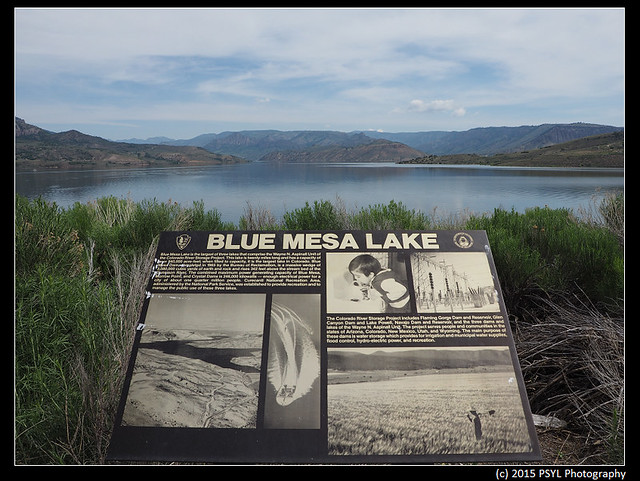
The trip began from Colorado and passed through Blue Mesa Lake again.

2015/07/17

July update - Research-related photos

This month I planned three road-trips measuring vegetative and reproductive traits of several Mertensia species in Colorado, Arizona, and Utah.  These road-trips brought me to many interesting places that I wouldn't otherwise have the chance to go to.

July 1st to 3rd (M. ciliata and M. bakeri)

2015-07-01-P7010003
Blue Mesa Lake, the largest lake in Colorado.

2015/05/21

Wildlife wonder at Gunnison National Forest

No, this is not another post about poor weather conditions forcing me to update my blog.  In fact, the weather was so decent yesterday and most of today (until late afternoon) that many wildlife seemed to come out of their shelter and enjoy the good weather.

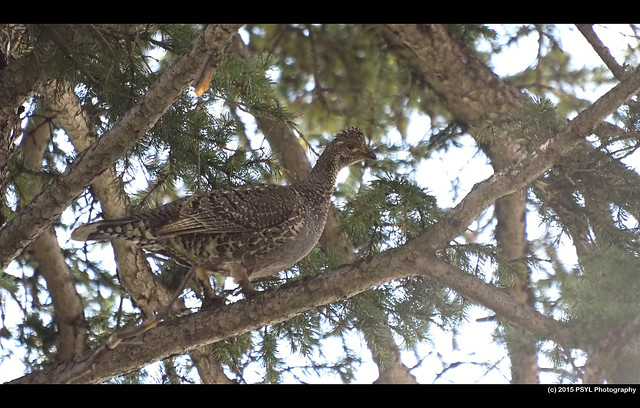
Yesterday, we went to Kebler Pass which was still under at least a couple feet of snow, so I helped out with the bee nest-box checking again.  While walking to the site, I accidentally spooked a grouse and it flew high up onto a tree.

Dusky Grouse (Dendragapus obscurus)
Dusky Grouse (Dendragapus obscurus) high up on a tree.

2015/04/12

Spring is here because of flowers and pollinators

Last night, I was planning where to go today and considered taking the bus to Stony Swamp, a natural area southwest of Ottawa where photos of interesting animals are frequently shared on Facebook, such as Black-backed Woodpecker during the winter, porcupines, frogs, etc.  But the thought of the trip taking almost two hours, while it is located 15.6 km west of where I live, is kind of ridiculous (Ottawa transit system is quite poor compare to the Metro Vancouver transit system).  Anyways, I decided to walk to the bus station (via Sawmill Creek Constructed Wetland) and visit the Arboretum in the end.

Little did I know I would see several interesting things today.

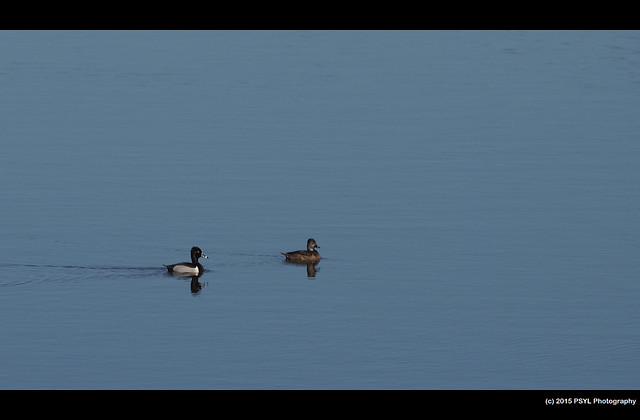
Ring-necked Duck (Aythya collaris)
First was this pair of Ring-necked Ducks (Aythya collaris) - first of the year!

2014/04/12

Dominion Arboretum, Ottawa

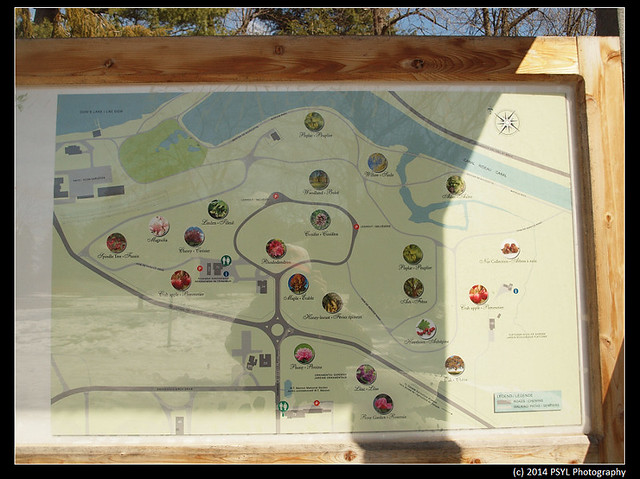
I traveled to the (Dominion) Arboretum this afternoon to see what the recent warm Spring weather has brought to us in terms of wild fauna and flora.  It was my first time traveling by O-Train and to the Arboretum, and I must say I am quite impressed by train, especially since it only took me about 25 minutes from where I live to the Arboretum.

2014-04-12-P4122923
Map of the Arboretum

2013/07/03

Field course in Algonquin - Part 2

The remainder of the field course involved a lecture every evening, so that the students can utilize the daytime to work on their field projects.  I took these photos around the research station when I wasn't busy helping out the students.

Love bud?
Fiddleheads, if I remember correctly.  I took it because it reminds me of a person doing the love pose.

2013/06/29

Taking a quick break

Since returning from Algonquin, I have been quite busy and don't have much time to go out and take photos even when it is nice out.

2013-06-23-P6235141
Got a photo of the Supermoon on Sunday after dinner.

Today, after working all morning and afternoon, I decided to go check out a spot near where I live that I think may have some opportunities for photography.  And I turned out to be correct!  The place is a man-made pond with ongoing construction all around it for more housings.  The trail is short (less than 100 m) and planted with many introduced species.  But they still attracted an interesting variety of insects.  I also heard Green frogs calling from the pond.

2013/05/27

Found Syrphid at Trent - Eristalis (Eoseristalis)

Today I found a Syrphid in a closed hallway here at school.  I collected it in a vial and put it in the refrigerator for a minute or two to cool it down and take some photos.

Using the Syrphid key that I received at the pollinator identification course last year, I keyed it out to Erizona sp. female (eyes do not meet at the top of the head) but I am not quite sure about it.

So here is how I keyed it out:
1. black abdomen with partial or complete transverse yellow bands,
2. assumed bare postpronotum (otherwise the key would lead me to Blera sp. which has pilose postpronotum),
3. abdomen tergites with no black velvet bands,
4. face mostly yellow,
5. eye with rounded emargination on posterior margin (as oppose to triangular emargination),
6. R4+5 vein conspicuously curved,
7. Vein R4+5 distinctly curving into cell r4+5,
8. Face yellow with black medial spot or stripe; R 4+5 shallowly curved into cell r4+5,
9. Third and fourth abdominal tergites with yellow margin = Eriozona (Megasyrphus).

I could not stand not knowing how wrong I was regarding the identification of the species, and so I enlisted the help of BugGuide.  Trusting the experts over there, they identified it as a Transverse Flower Fly (Eristalis transversa), which based on other photos does look similar to my photos.  Going back to the key, I keyed it backwards knowing the species (or subgenus Eoseristalis).

- Hairy bulky flies with long, black/brown/yellow hairs, similar to bumblebees and honeybees
- Face either concave, or somewhat swollen, or with central tubercle
- Arista bare, or with inconspicuous hair (at most slightly longer than arista width)
- Vein R4+5 sinuous
- Cell r1 closed before wing margin; hind femur neither enlarged nor with prominent lobes or extensions

- Katepimeron, half of anepimeron, meron, and metapisternum bare = Eristalis (Eoseristalis)

2013-05-27-DSCN2449
You can see the conspicuously curved R4+5 wing vein and closed r1 cell.
2013/05/10

Recap of the week - new macro technique and critters saw during Enrichment camp

While experimenting with my Nikon P&S lately, I found out that if I hold my small hand lens (for plant identification) in front of the P&S lens, then I can get a pretty decent close-up photo of the critter/flower (but I need to get very close).

2013-05-06-DSCN2377
I took photos of this spider just outside my office window on Monday.

On Tuesday and Thursday, I assisted with two of the mini-course programs held here at Trent.  One was getting elementary students "Wild About Nature!", and the second was teaching students about "Habitat and Organisms".  It has been a while since I worked with children, but it's quite rewarding especially now that I am teaching them about nature.

For "Wild About Nature!", we first made a field kit, consisting of a clinometer, a plant press, and an insect-collecting container.  We then took the children outside to measure tree heights using the clinometer.  We also played games with the children - one called "Predator & Prey" (three trophic levels - grasshoppers, orioles, and hawks) and one with three different feeding apparatuses (modified plastic knifes, spoons, and forks) to collect different prey types.  We also took the children outside to collect plants and insects.

2013/04/21

Walks to school & Woodcock video

Came to school during the weekend to do some work.  The weather was so nice today that I decided to walk to school instead (as well as take some photos along the way).

 2013-04-21-P4210424
Lots of American Robins are back.  Here is one watching the road.

2012/10/30

Flower visitors to soapberry (Shepherdia canadensis) flowers in Ivvavik

The weather had been relatively bad the past few days (but nothing as bad as the one faced by people on the east coast), especially last night with heavy rain and strong winds.  It is currently just rainy and wet out at the moment.

Anyways, here are some more photos from Yukon.  This field season, I was more or less continuing to study the pollination of soapberry (Shepherdia canadensis) with a few tweaks here and there, and pollination of another (gyno)dioecious species - Silene acaulis (moss campion).  But here are some of my photos of insects visiting S. canadensis.

Unknown ant visiting soapberry flower
Unknown ant species (Formicidae) visiting female flowers.

2012/08/03

Raccoon Family at Lost Lagoon

I accompanied my mother to downtown Vancouver today to pick up prizes that she had won from a local newspaper contest.  Afterwards, while it was still early, we decided to bus to Stanley Park and walked around the Lost Lagoon.  According to this post (the photos from that post have all been taken down by the server, sorry), the last time I was there was more than three years ago!?

Anyways, today was a nice day to be out - although there were too many people to our likings.

2012-08-03-P8035057
Several Mute Swans around the lagoon.

2012/05/28

Update from Inuvik, NWT

Hi all, I am currently in Inuvik, NWT.  I left Ontario on the 15th and then left BC on the 22nd.  Nothing much was done while in BC - mostly just relaxing and enjoying family time with my parents.  My trip up north started on the 23rd from Edmonton to Inuvik, via Yellowknife and Norman Wells.  Here in Inuvik, we were suppose to fly out to Ivvavik National Park on the morning of 26th.  However, once we were in the air and near Sheep Creek, we found that it was covered by thick clouds and snow, and so we had to turn back to Inuvik.  We tried again on the 27th, but due to pilot unavailability (in the morning) and poor weather again (in the afternoon), we were grounded for one more day.

Today is the 28th and I really really hope that we can take off today and get my field season started.

Here are some photos that I took for the past few days.  No time for description for the photos, but they are pretty self explanatory.

View from Yellowknife Airport


View from Norman Wells Airport


2012-05-23-P5231445

2012-05-23-P5231452

2012-05-23-P5231460

2012-05-23-P5231473

Unknown Megachile sp.

2012-05-23-P5231498

2012-05-23-P5231522

Fox Sparrow (Passerella iliaca)

2012-05-24-P5241529

2012-05-24-P5241530

2012-05-24-P5241533

2012-05-24-P5241539

Spruce Grouse (Falcipennis canadensis)

Spruce Grouse (Falcipennis canadensis)

Spruce Grouse (Falcipennis canadensis)

Spruce Grouse (Falcipennis canadensis)

Spruce Grouse (Falcipennis canadensis)

Spruce Grouse (Falcipennis canadensis)


2012-05-24-P5241580

2012/04/21

Bees and birds and a wedding

Yesterday (20th), we learned about pollinator foraging behaviours and the techniques they used when visiting different type of flowers and inflorescence in order to maximize their gain and minimize the loss.  We also began brainstorming about our field projects, and another student and I were thinking of teaming up to study what are the effects of ants on stigma receptivity and pollen germination.

This morning was a lecture on abiotic pollination - wind and water.  In the afternoon, we were off to the botanical garden to bag some flowers and start on our project.

Carpenter Bee (Xylocopa virginica) robbing nectar
Carpenter bee stealing nectar from the columbines.

2012/04/17

Shaw Nature Reserve

In the morning we learned about the botanical and floral diversity in pollination biology. For example, the different mating and breeding systems for plants, as well as the history of categorizing flower types to better associate the pollinators and the appropriate pollinator syndrome.

Unknown Syrphid (Family Syrphidae)
Photographed a Syrphid during a break.

2012-04-17-P4170472_nEO_IMG
Asian lady beetle (Harmonia axyridis)

In the afternoon, we headed to a different part of Missouri Botanical Garden outside the city. It is called Shaw Nature Reserve.

2012/04/13

Quick post about past week - mostly pollinators

Long story short, I am heading to St. Louis this weekend to participate in a pollination field course in Missouri Botanical Garden. Before I leave, I had many many things to do. Most of the more important tasks are done now, and now onto posting photos and blog writing about what I did since last Friday.

2012/04/07

I biked to Jackson Park hoping it would be nice and pretty by now.

2012-04-07-DSCN0713
Unfortunately not. The lake/pond is still really low and the trees are just producing buds.
Related Posts Plugin for WordPress, Blogger...