Showing posts with label syrphid. Show all posts

2017/07/27

More urban insects on campus

As I mentioned last month, there is a group of pollination-enthusiasts conducting weekly pollinator observations on uOttawa campus.  Here are some of the insects and plants we have observed this month.

Because of all the insect photographs I am taking, I bought a small flash this month and started incorporating a diffuser and reflector into my macrophotography based on the tutorial from this blogger.

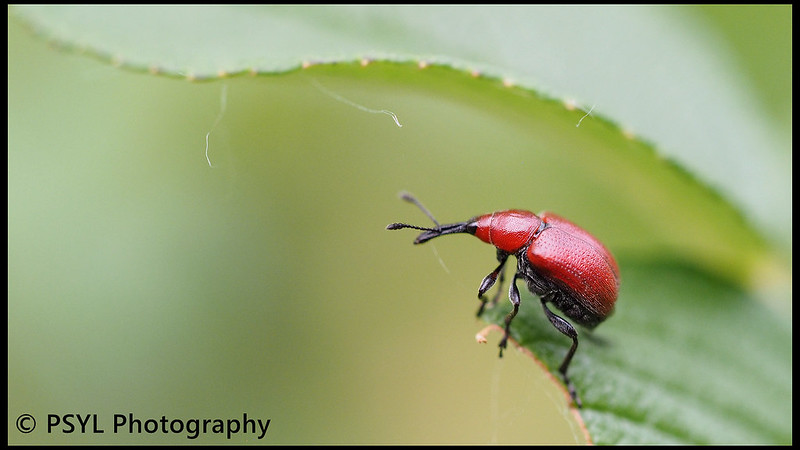
Rose Curculio (Merhynchites bicolor)

2017/06/22

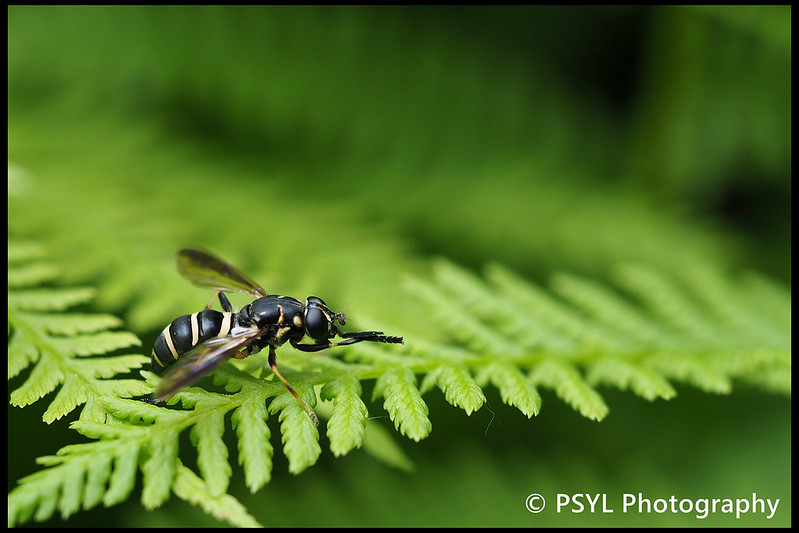
Wasp-mimicking Temnostoma fly

I was planting some native plants on campus today and saw a syrphid fly mimicking a wasp by holding its front legs out front like a wasp's antenna.  I believe it is a Temnostoma sp., which I saw a similar one more than four years at Algonquin.

Temnostoma syrphid fly
Nature is so fascinating!

2016/05/18

Exploring McCarthy Woods for new warbler lifers!

Yesterday I came across this blogger's post about all the interesting birds found in McCarthy Woods and nearby areas.  So today, I went there to look for them myself.

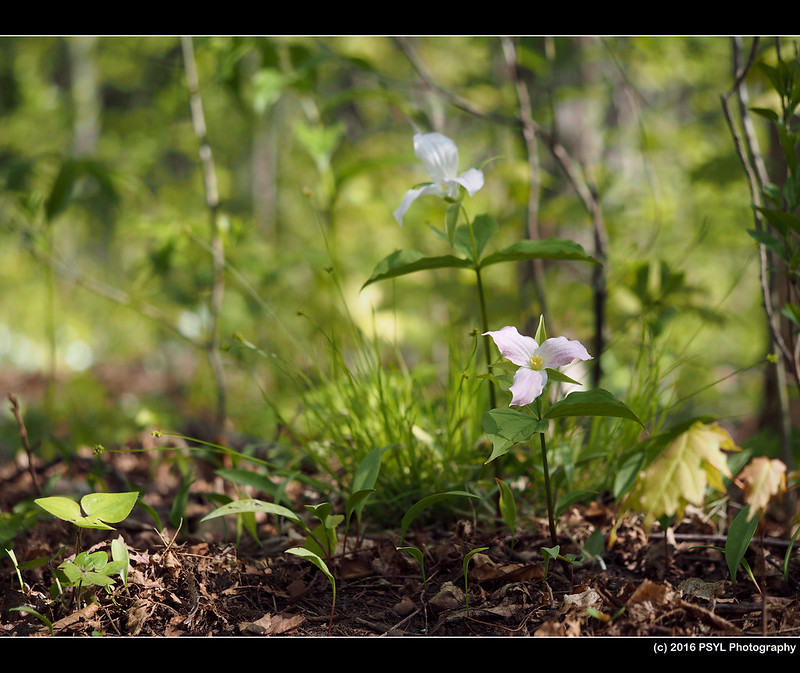
White Trillium (Trillium grandiflorum)
McCarthy Woods is quite beautiful this time of the year where the White Trilliums (Trillium grandiflorum) dominate the forest floor.

2016/04/30

Trout lily survey

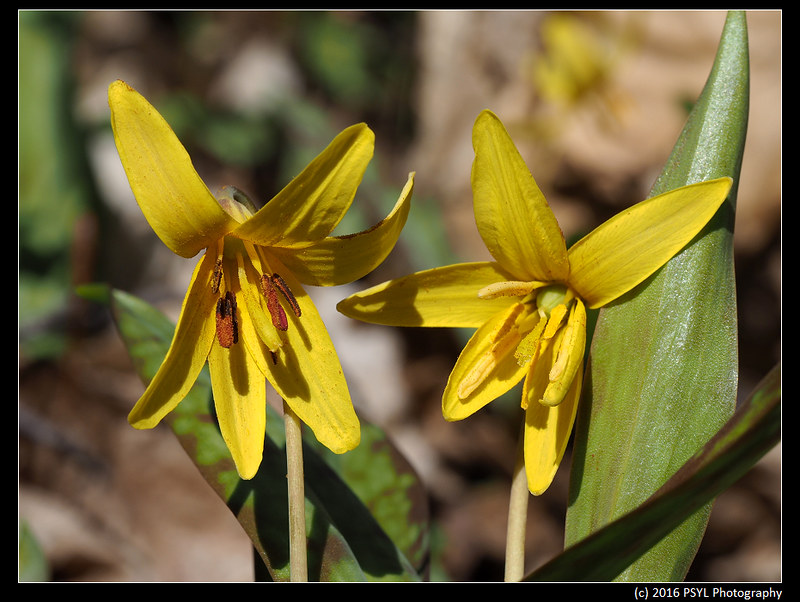
Why are the anther colours different in trout lilies?  This might be a question that enters your mind every spring if you enjoy exploring forests and watching ephemeral plants flower before the canopy closes over and the presence of biting insects dissuades you from entering the forest.

For those not sure what I am talking about, here is a photo I took this morning (in McCarthy Woods) of two trout lilies (Erythronium americanum) growing side-by-side that have different anther colours (red versus yellow).

2016-04-30-P4300008

2015/06/30

June update - Invertebrates

I saw quite a lot of invertebrates (butterflies, beetles, flies, bees, spiders, and one millipede) in June.  Most are not yet properly identified.  I will try to do so later in the field season.  Until then, just enjoy the diversity of invertebrates seen here in Gunnison National Forest.

2015-06-02-P6020135
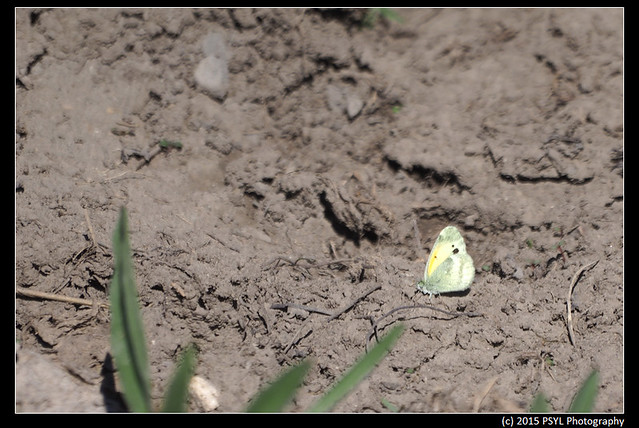
Unknown sulphur butterfly.

June update - Research-related photos

Here are some photos related to my research.

2015-06-01-P6010038
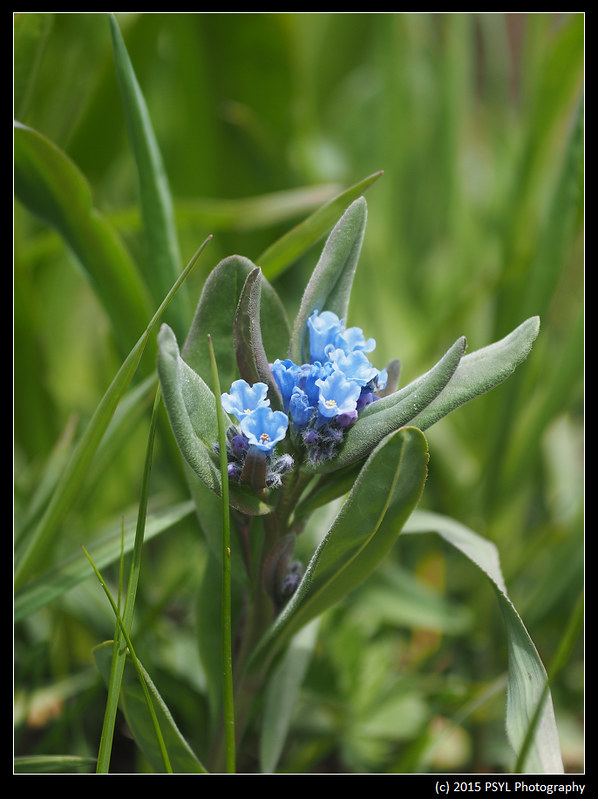
Mertensia fusiformis

2014/09/01

Mud Lake, Ottawa revisited

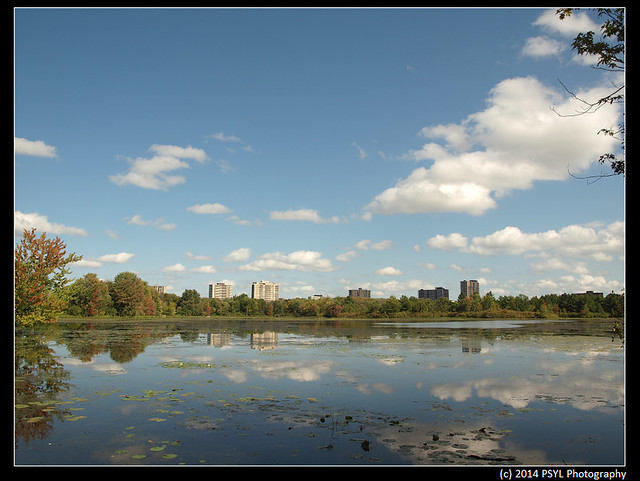
Given that school begins tomorrow and I now have a valid bus pass, I decided to go to Mud Lake today to do some wildlife-watching before the hectic school semester begins.  The last time I was there was almost nine months ago, so everything are different now, especially temperature-wise.  To read more about the different types of wildlife one can encounter at Mud Lake at different times of the year, read this post at the blog The Pathless Wood.

P9018432
A true summer (sunny, hot, and humid) day today.

2014/05/09

More flowers and insects at McCarthy Woods

Here are some photos taken today.

2014-05-09-P5093916
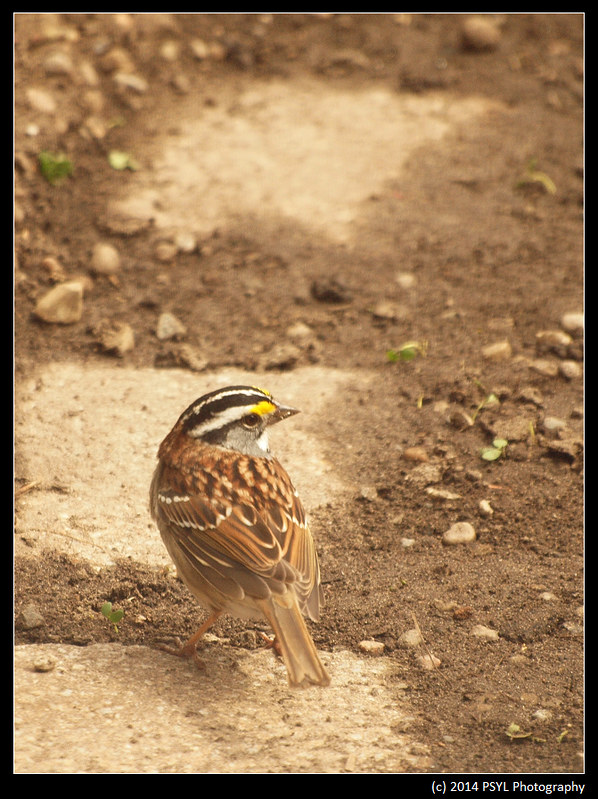
White-throated Sparrow (Zonotrichia albicollis) near the feeder at the place where I live.

2013/09/25

No fall colours yet in Peterborough

I spent all morning and most of the afternoon yesterday at home working on data analyses.  Afterwards, I biked to Jackson Park to see if the fall colours have arrived or not, and then got some groceries on the way home.

P9249536
Not yet, I'd say, compare to 2011 and 2012.

2013/08/05

Arctic/alpine pollination workshop in Kluane National Park, Yukon - Part 2

During the workshop we had various presentations from researchers currently working in the Canadian Pollinator Initiative (CANPOLIN) and members from the Yukon government and local First Nations group.  We also discussed tasks that need to be done as the NSERC funded initiative is coming to an end, and also brainstormed topics/projects that will be of relevance to people living in northern communities and scientists in the future.

2013-07-23-P7236514
Thank you to the AINA for hosting us.

2013/08/04

Arctic/alpine pollination workshop in Kluane National Park, Yukon - Part 1

Hello all, my lengthy summer travels concluded on Friday when we drove about 2,000 km from New Orleans to Peterborough, Ontario in 36 hours.  I am slowly sorting through all of my photos from my trips, starting with the workshop titled "Pollination, Climate Change and Invasive Species in Arctic and Alpine Ecosystems" in Kluane Research Station in Yukon.  There will be at least one official document reporting on the outcomes of the workshop, so I will not comment on the specifics. The general conclusion is that researchers (from both Canada and US), the Yukon government, local First Nations groups, and independent scientists all agree about the importance of climate change and pollination and the limited information currently present about Arctic and alpine regions.  Therefore, we will try to incorporate scientific communities and citizens in northern communities to start documenting zoological and botanical changes in various spatiotemporal scales.

Below are photos from the first two days of my Yukon trip (21st to 22nd).

2013-07-21-DSCN2506
Arriving in Whitehorse on July 21st.  The weather was miserable and rainy.

2013/07/05

Field course in Algonquin - Part 4

Friday (June 21st) was our last full day here in Algonquin.  The students presented their results in the evening, test on Saturday morning, and then we came back in Peterborough on Saturday evening.

In the morning, we asked the students (those that felt comfortable with their presentation) if they would like to go for a walk at the Beaver Pond Trail

P6215025
Towards the middle section of the trail, we actually stumbled upon a beaver (Castor canadensis) on the trail gnawing on a low branch.  Just a few moments ago before seeing the beaver, the students were talking about a man-killing beaver (news here), and so the students were startled (to say the least) when they saw the actual animal.  Long story short, the beaver paid no attention to the shrieking students and left, while the only photo I could get was above.

2013/07/03

Field course in Algonquin - Part 2

The remainder of the field course involved a lecture every evening, so that the students can utilize the daytime to work on their field projects.  I took these photos around the research station when I wasn't busy helping out the students.

Love bud?
Fiddleheads, if I remember correctly.  I took it because it reminds me of a person doing the love pose.

2013/06/29

Taking a quick break

Since returning from Algonquin, I have been quite busy and don't have much time to go out and take photos even when it is nice out.

2013-06-23-P6235141
Got a photo of the Supermoon on Sunday after dinner.

Today, after working all morning and afternoon, I decided to go check out a spot near where I live that I think may have some opportunities for photography.  And I turned out to be correct!  The place is a man-made pond with ongoing construction all around it for more housings.  The trail is short (less than 100 m) and planted with many introduced species.  But they still attracted an interesting variety of insects.  I also heard Green frogs calling from the pond.

2013/06/01

Good start to June - flowers, insects, and birds.

Came to school today to do some work.  Along the way, I saw this single yellow iris among the grasses next to the Otonabee River.  Strange place for a garden plant to be.

Yellow Iris
Very pretty nonetheless.

2013/05/27

Found Syrphid at Trent - Eristalis (Eoseristalis)

Today I found a Syrphid in a closed hallway here at school.  I collected it in a vial and put it in the refrigerator for a minute or two to cool it down and take some photos.

Using the Syrphid key that I received at the pollinator identification course last year, I keyed it out to Erizona sp. female (eyes do not meet at the top of the head) but I am not quite sure about it.

So here is how I keyed it out:
1. black abdomen with partial or complete transverse yellow bands,
2. assumed bare postpronotum (otherwise the key would lead me to Blera sp. which has pilose postpronotum),
3. abdomen tergites with no black velvet bands,
4. face mostly yellow,
5. eye with rounded emargination on posterior margin (as oppose to triangular emargination),
6. R4+5 vein conspicuously curved,
7. Vein R4+5 distinctly curving into cell r4+5,
8. Face yellow with black medial spot or stripe; R 4+5 shallowly curved into cell r4+5,
9. Third and fourth abdominal tergites with yellow margin = Eriozona (Megasyrphus).

I could not stand not knowing how wrong I was regarding the identification of the species, and so I enlisted the help of BugGuide.  Trusting the experts over there, they identified it as a Transverse Flower Fly (Eristalis transversa), which based on other photos does look similar to my photos.  Going back to the key, I keyed it backwards knowing the species (or subgenus Eoseristalis).

- Hairy bulky flies with long, black/brown/yellow hairs, similar to bumblebees and honeybees
- Face either concave, or somewhat swollen, or with central tubercle
- Arista bare, or with inconspicuous hair (at most slightly longer than arista width)
- Vein R4+5 sinuous
- Cell r1 closed before wing margin; hind femur neither enlarged nor with prominent lobes or extensions

- Katepimeron, half of anepimeron, meron, and metapisternum bare = Eristalis (Eoseristalis)

2013-05-27-DSCN2449
You can see the conspicuously curved R4+5 wing vein and closed r1 cell.
2013/05/10

Recap of the week - new macro technique and critters saw during Enrichment camp

While experimenting with my Nikon P&S lately, I found out that if I hold my small hand lens (for plant identification) in front of the P&S lens, then I can get a pretty decent close-up photo of the critter/flower (but I need to get very close).

2013-05-06-DSCN2377
I took photos of this spider just outside my office window on Monday.

On Tuesday and Thursday, I assisted with two of the mini-course programs held here at Trent.  One was getting elementary students "Wild About Nature!", and the second was teaching students about "Habitat and Organisms".  It has been a while since I worked with children, but it's quite rewarding especially now that I am teaching them about nature.

For "Wild About Nature!", we first made a field kit, consisting of a clinometer, a plant press, and an insect-collecting container.  We then took the children outside to measure tree heights using the clinometer.  We also played games with the children - one called "Predator & Prey" (three trophic levels - grasshoppers, orioles, and hawks) and one with three different feeding apparatuses (modified plastic knifes, spoons, and forks) to collect different prey types.  We also took the children outside to collect plants and insects.

2013/02/08

Insects of Ivvavik National Park

Trent University was open this morning until 2 PM when the school decided to cancel all of the classes because of the snowstorm.  So here I am sitting in my room enjoying the most snow I have ever seen in my life while reminiscing the insects that I observed in Ivvavik National Park.  Despite the abundance and diversity being pretty low relative to southern latitudes, it's the Arctic after all, it is still fascinating to see the critters that call Ivvavik home.

Green Comma (Polygonia faunus)

Flower Fly (Syrphidae) on Grass of Parnassus
A unknown Flower Fly (Syrphidae) on Grass of Parnassus flower.

Old World Swallowtail (Papilio machaon)

Old World Swallowtail (Papilio machaon)

Dorcas Copper (Lycaena dorcas)

Dorcas Copper (Lycaena dorcas)

Dorcas Copper (Lycaena dorcas)

Dorcas Copper (Lycaena dorcas)

Dorcas Copper (Lycaena dorcas)

Dorcas Copper (Lycaena dorcas)

Dorcas Copper (Lycaena dorcas)

Dorcas Copper (Lycaena dorcas)
Dorcas Copper (Lycaena dorcas) - definitely one of my favorite butterflies from the summer.

Unknown Sulphur (Colias sp.)

Unknown Sulphur (Colias sp.)
Unknown Sulphur (Colias sp.) - quite drabby-looking considering other brightly colored individuals.

Unknown Sulphur (Colias sp.)
Colias sp.

Northern Blue Butterfly (Lycaeides idas)

Northern Blue Butterfly (Lycaeides idas)

Northern Blue Butterfly (Lycaeides idas)

Unidentified Bumblebee (Bombus sp.)

Unidentified Bumblebee (Bombus sp.)

Unknown Marble Butterfly (Euchloe sp.)

There is an event tomorrow hosted by the Kawartha Heritage Conservancy that I hoping to go with some people.  Hope it will not be canceled. 

2012/10/30

Flower visitors to soapberry (Shepherdia canadensis) flowers in Ivvavik

The weather had been relatively bad the past few days (but nothing as bad as the one faced by people on the east coast), especially last night with heavy rain and strong winds.  It is currently just rainy and wet out at the moment.

Anyways, here are some more photos from Yukon.  This field season, I was more or less continuing to study the pollination of soapberry (Shepherdia canadensis) with a few tweaks here and there, and pollination of another (gyno)dioecious species - Silene acaulis (moss campion).  But here are some of my photos of insects visiting S. canadensis.

Unknown ant visiting soapberry flower
Unknown ant species (Formicidae) visiting female flowers.

2012/07/24

Revisiting Paulik Park, Richmond

I arrived back in Richmond three days ago, and I have been just relaxing and not doing much outdoor stuff.  Today, after doing some errands for my parents, I drove my mother to Paulik Park to look for some wildlife.  I don't think I have been to this park during any of the summers, so I was surprised to see all the beautiful flowers and pollinators and hummingbirds that were hanging around the garden.

Paulik Park
Almost like a secret garden.

Related Posts Plugin for WordPress, Blogger...