Showing posts with label parasite. Show all posts

2015/05/31

May update - assorted topics

We are having several consecutive days of relatively nice weather throughout the day so I have been quite busy working (and taking photos) but not posting them.  Here are a lot of photos from the last week of May.

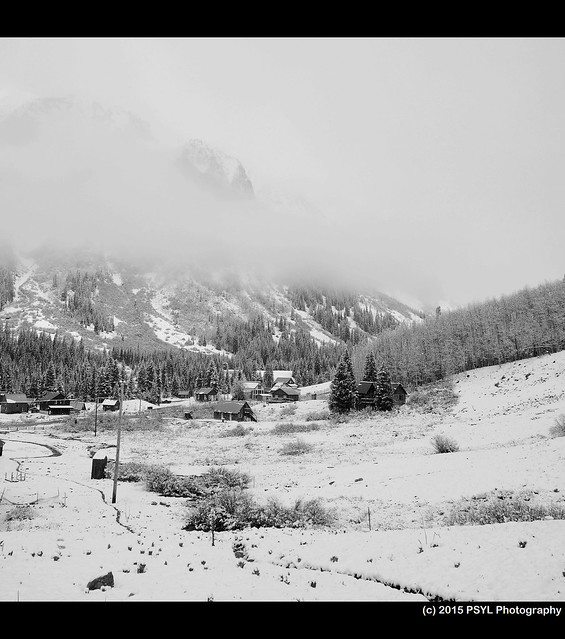
Snow day (May 25th, 2015)

Before the weather got better, it got worse on the 25th when it snowed and we lost power overnight and in the morning after (so no heat and no internet). I couldn't do any work except walking around Gothic and taking pictures.

Gothic townsite

2009/07/08

Working indoors most of the day...

Almost the entire day today was spent indoors organizing and analyzing last year's data, including incubation time, brooding time, feeding time, and cleaning time. All part of the necessary work to achieve quality work. Sigh.

So when I had the chance to go outside and helped out a little, I was more than glad to contribute.

The sidewalk Camphor tree again. The barbet photographed is the male adult. It has a much cleaner and brighter plumage than the female, and when we checked again in the afternoon, there were still three eggs.

But after being outside for less than fifteen minutes, co-workers at another nest site had successfully captured the female adult and required assistance back in the office for physical measurements and leg-banding. So back to the office again.

Before leaving work in the afternoon, I photographed the caterpillar again. Initially, the situation looked the same as usual until I noticed a few small insects inside the container as well.

There were tens of these tiny (about 2-mm in length) wasp-looking insects. It's very likely that they hatched from the cocoons on the poor caterpillar. I saw some of these insects on the dead caterpillar, possibly feeding on it. I wonder if they will get any larger.

Hopefully, I will have the chance to watch my co-workers catch the second of the barbet adult pair tomorrow.
.

2009/07/07

Strange living places

Yesterday, a volunteer observer told me about a Black Drongo (Dicrurus macrocercus) nest at a metro station near where I live. So in the morning, I rode the train backwards one station to see it for myself. The nesting bird was indeed there, right across from the metro tracks. What a strange place to live.

Black Drongo (Dicrurus macrocercus) in the brooding stage. I love its tail!

Before arriving work early, I hang around the Lotus Pond in TBG and took some pretty nice photos.

Beautiful Water Lily

Black-crowned Night Heron (Nycticorax nycticorax) - 夜鷺
Black-crowned Night Heron fighting for bread crumbs that tourists are throwing to feed the fishes in the pond.

Common Moorhen (Gallinula chloropus) - 紅冠水雞
Common Moorhen had to join in on the action as well.

Afterwards, I headed back to office to start working on my paper report. Most of my morning consisted of analyzing and describing photos of nestling developments. During lunchtime, I came outside again to check out a new nest site that my co-workers have been monitoring for a while now. The nest site is located adjacent from the TBG, so it is not actually inside the garden. Nevertheless, the data will be worth having since this is a new nest tree with a new pair so that we can have a complete set of data of this particular nest.

While I was there, the male adult came close to the female and mounted her! What horny birds, according to my colleagues, because this pair has sex quite often.

Since I was just visiting I did not take part of the endoscopic observation. So I can finally photograph and show you how we do it.

The above photo is the nest entrance. As you can see, the nest is again inside a Camphor tree on a sidewalk of a busy street (second strange living places of the day). The below left photo shows one person handling the extended pole with the endoscopic equipments attached to it while another has a small screen attached to the camera and takes photographs of the latest nest status [the photograph showed 3 eggs already]. So why copulating again? The below right phot shows the camera (and LCD lights) extending into the nest cavity to record the status. Isn't it fun? This nest is relatively close to the ground so using the pole is enough. But imagine a nest at least 10 meters above the ground. That's when it gets dangerous and tricky.

Still the same...

2009/07/06

TBG Attractions

I spent a part of the morning just walking around the botanical garden carrying equipements back and forth.

This is one of the Muller's Barbets that we were recording today. The below is the female adult, as identified by its whitish lower beak.

Muller's Barbet (Megalaima nuchalis) - 五色鳥
Muller's Barbet (Megalaima nuchalis)

From now on, one of my main tasks will be sorting and compiling literatures and writing my paper report; hence, my work will be taking place inside the office. Nevertheless, when I have the time and opportunity to go out to the botanical garden, I tried to enjoy every moment.

The beautiful male Black-naped Blue Monarch (Hypothymis azurea) standing on its nest with two new nestlings. This nest is becoming photographers' favorite subject to shot in the garden.

I still get arranged to observe barbets for three hours when we are short-handed, such as today. While watching for the parent barbets to come back and feed their nestlings (which was infrequent), a female Oriental Magpie Robin came just a few meters away from me.

Female Oriental Magpie Robin (Copsychus saularis) - 鵲鴝
Female Oriental Magpie Robin (Copsychus saularis)

As some of you may already know, the botanical garden is also quite abundant in the stray cats inhabiting this area. They are also quite a favorite attraction among common tourists because no one can deny their cuteness and beauty.

Mama cat and baby kitten

Stray Cat in Taipei Botanical Garden

Stray Cat in Taipei Botanical Garden
Taking a nice nap...

While heading back to the office, we came across a Malay Night Heron standing on a grass field (and later scared onto a tree by a cat).

Malay Night Heron (Gorsachius melanolophus)

Not much seems to have progressed during the weekend.
.

2009/07/04

Seeing the beautiful Oriental Magpie Robin and Little Egret

Yesterday, I had dinner with a co-worker/friend and by the time I got home it was already midnight. So sorry for the late post.

Yesterday's work was more or less the same as the past few days: observing and trying to catch barbets. We spent almost the entire day trying to catch the other barbet, but it was unsuccessful. Observing the other barbet pair was fairly simple as they are in the incubation stage so the parents stayed inside the cavity for an extended amount of time and poked their heads out every ten minutes or so. The cavity allows only one parent inside at one time, so the two alternate every hour or so.

Above is the male bird. He can be identified by the two spots on the upper left side of his face (one dark spot just in front of its eyes and one spot on his beak). The bottom is the female and she does not have the spots.

While observing the barbets, a beautiful male Oriental Magpie Robin (Copsychus saularis) flew just a few meters away from me! Definitely a worthy moment to remember.

Oriental Magpie Robin (Copsychus saularis) - 鵲鴝
Even though it's named a "robin", it belongs in the Family Muscicapidae (not the thrush family Turdidae).

While trying to catch the other barbets. A Little Egret flew onto the tree where the barbet nest is in.

Little Egret preening.

Little Egret (Egretta garzetta) - 小白鷺
Maginificent looking bird.

Little Egret taking off!

This is the latest stage of the caterpillar and the parasitic eggs.

Today I will be staying home and trying to get started on my research paper. So I doubt I will have anything interesting to post about today. Laters.
.

2009/07/02

Stag Beetle & Little Egret in TBG

Another tiring day today. I spent most of the day in the botanical garden observing barbets and trying to catch them. Fortunately, at the end of the day, our modified (several times) mist net trap finally worked and caught an adult!

Other than watching barbets, I still found time to find and photograph these cool creatures!

Dorcus titanus sika - 扁鍬形蟲
Dorcus titanus sika is a beetle of the family Lucanidae. This is one of the most common stag beetles in Taiwan, and the males are about 24 to 72-mm in length, while the females are 24 to 42-mm in length. This individual is quite small and is about 25-mm long only.

The observation station today was the same as yesterday. So I checked to see if the mushroom is still there or not. Surprisingly, it had changed! [I am still working on identifying it.]

Near where we were trying to catch the parent barbets, a Little Egret was trying to catch fishes.

Walking along the wooden columns and catching fish

Little Egret (Egretta garzetta) - 小白鷺

Little Egret (Egretta garzetta) - 小白鷺
Quite an elegant and graceful looking bird, no?

This is today's status on the caterpillar and the parasites.
.

2009/07/01

Photos of the Day: Day Three

I just had a group dinner with new friends from last week's orientation tour. Plus, today was extremely hot and stuffy in Taipei City, so it wasn't too pleasant working under the sun. Here're some of the interesting photos that I took.

The latest nest tree discovered and its owner. Inside the nest cavity are three eggs. Strangely, in the three hours that I observed, I only saw the male parent incubating the eggs. I wonder where the female went.

Near where we were observing the nest, a bright orange mushroom was found. I hope to have its identification soon because it's quite beautiful.

In addition to observing the nest, we continued with our barbet catching assignment. The first method of using a mist net with extendable poles on two sides never really worked out since the parent barbet never allowed enough time for us to make our move. So in the late afternoon, we changed our plan and used a smaller mist net hanging (on four corners) placed just outside the entrance - kind of like raising a flag. We will be trying this method again tomorrow.

While catching the birds, I tried to photograph a Chinese Bulbul's nest while the parents were away. But shortly afterwards, the parent returned and wasn't very happy with me being an intruder. So I quickly left them alone.

Back in the office, the parasitic eggs are entering into another life stage...So fast?
.

2009/06/30

Seeing an out-of-season White's Ground Thrush and Barbet catching lizard!?

Second day of internship started with a beautiful morning.

Before heading to the office, I walked around the Lotus Pond and took pictures of the blossoming water lilies.

Soon after, I saw a Malay Night Heron flying up on to a rooftop.


For the most part of the day, I spent time in the office looking over research papers on what to include in a fundamental biological paper regarding a specific species. Another task of the day was heading out to the botanical garden and try to capture and leg-band the adults of some nest sites.

Our method was to set up a mist net before the nest entrance of the barbets. This particular nest site has one fledgling in it, so the parents had to fly regularly to feed it. We allow the parent bird to enter the nest without harm. Once it had entered, we rushed to the bottom of the tree and hold up the poles (with the mist net). We caught an adult once, but the net was too loose and the bird bounced off after. So we made another net, but no success catch afterwards. Sigh. We will have to wait for tomorrow again.

Waiting for the adult barbets to arrive requires a lot of patience. Thankfully, a lot of interesting critters were found around us so we weren't bored at all.

A moth caterpillar belonging in the Family Psychidae with parasitic eggs laid on it. We suspect it's the work of a parasitic wasp. I brought the caterpillar back to the office and will observe it everyday from now on.

Another task was to follow through with yesterday's work and see if the third egg has been laid or not (only two eggs had been positively identfied yesterday). While moving things around to assist our work, we found a larvae of some kind of a beetle.

What a juicy looking thing. If I am a bird, I would definitely eat it!

One of the most interesting things of the day was seeing this White's Ground Thrush (Zoothera dauma). It is an interesting sighting since the species migrates and winters in Taiwan during winter only. To see this bird in the summer is definitely a surprise!

It was found underneath the canopy and the boarded pathways, so it was extremely difficult to photograph and get a good image. These were the best ones I have.

When returning back to see if the adult barbet had arrived for us to catch it, we received a major surprise and saw a Swinhoe's Japalura in the bill of the parent barbet!!! It was the first time that I (and my experienced co-worker) had witness Muller's Barbet feeding its offspring a lizard!


After feeding the fledgling inside with a large lizard, (another?) parent barbet came back and brought back a smaller japalura again this time!


What a day!
.
Related Posts Plugin for WordPress, Blogger...